The Dawn of a New Era in Engineering: Artificial Intelligence
Artificial Intelligence (AI) is no longer a futuristic concept confined to the pages of science fiction novels or the screens of Hollywood movies; it is an active, driving force reshaping industries across the globe. For engineering students at Jaipur Engineering College (JEC), AI represents both a powerful tool and an exciting new frontier to explore. The integration of AI into engineering is fundamentally changing how we design, build, and maintain the world around us. From civil engineering structures that monitor their own health to mechanical systems that optimize their own performance, AI is the new bedrock of innovation.
In this comprehensive guide, we will explore the multifaceted impact of AI on engineering education, the industries it is disrupting, and how institutions like JEC are preparing the next generation of engineers to thrive in this new paradigm. Whether you are a prospective student, a current engineering major, or an industry professional, understanding the trajectory of AI is paramount.
1. The Intersection of AI and Computer Science
Naturally, the most profound impact of Artificial Intelligence is felt within the realm of Computer Science. AI, Machine Learning (ML), and Deep Learning are not just subsets of computer science; they are becoming the core around which modern software is built. Students in our Computer Science Department are at the forefront of this revolution.
Traditional programming relies on explicit instructions: "If X happens, do Y." AI, however, relies on training models with vast amounts of data so that the system can make inferences and decisions on its own. This paradigm shift requires a new approach to education. Students must now master data structures, algorithms, statistics, and linear algebra to understand how neural networks operate under the hood.
Outbound Resource: To understand the global standards for AI curriculum, one can look at the guidelines provided by the Institute of Electrical and Electronics Engineers (IEEE), which continuously updates its frameworks to include modern AI competencies.
2. AI in Mechanical and Automotive Engineering
While computer scientists build the AI brains, mechanical engineers are building the bodies. The synergy between AI and mechanical engineering has given rise to advanced robotics, autonomous vehicles, and smart manufacturing.
In the automotive sector, self-driving cars rely heavily on computer vision (a branch of AI) to navigate roads, detect obstacles, and make split-second decisions. Mechanical engineers are tasked with designing the sensors, actuators, and physical systems that execute these AI-driven commands safely and efficiently. At JEC, our Mechanical Engineering students are exposed to these concepts through project-based learning and interdisciplinary collaboration.
Furthermore, AI is revolutionizing manufacturing through predictive maintenance. Instead of waiting for a machine to break down, AI algorithms analyze sensor data in real-time to predict when a component will fail, allowing for preemptive repairs. This saves industries millions of dollars in downtime and forms a crucial part of modern industrial engineering.
3. Transforming Civil Engineering with Smart Infrastructure
Civil engineering, one of the oldest engineering disciplines, is experiencing a renaissance thanks to AI. The concept of "Smart Cities" relies heavily on the integration of sensors and AI to optimize traffic flow, manage energy consumption, and monitor the structural integrity of bridges and buildings.
AI algorithms can analyze decades of weather data, material stress tests, and soil conditions to help civil engineers design structures that are more resilient to natural disasters. During construction, AI-powered drones can survey sites, track progress, and even identify safety hazards, significantly improving project management efficiency. Students in the Civil Engineering Department are learning to incorporate these data-driven methodologies into their foundational design practices.
Outbound Resource: Organizations like the American Society of Civil Engineers (ASCE) are actively promoting the use of AI and Big Data to tackle the challenges of modern urbanization and sustainable infrastructure.
4. Electrical Engineering and the Smart Grid
The global transition to renewable energy sources like solar and wind presents a massive challenge: grid stability. Unlike traditional coal or gas power plants, renewable energy is intermittent. The wind doesn't always blow, and the sun doesn't always shine.
This is where AI steps in. AI models are used to predict energy demand and generation with incredible accuracy. These models analyze weather forecasts, historical usage patterns, and even social events to balance the grid in real-time. Electrical engineers are designing these "Smart Grids" to automatically route power where it is needed most, preventing blackouts and optimizing the use of renewable resources.
Our Electrical Engineering curriculum at JEC integrates these modern challenges, encouraging students to explore how AI can be utilized to create a more sustainable and robust energy infrastructure.
5. The Ethical Implications of AI in Engineering
With great power comes great responsibility. As AI systems take on more critical roles in society, the ethical implications of their decisions become a paramount concern for engineers. If an autonomous vehicle is forced to choose between hitting a pedestrian or swerving into a barrier and injuring its passenger, how should it be programmed to react?
Furthermore, AI models are only as good as the data they are trained on. If historical data contains biases, the AI will inherit and amplify those biases. Engineers must be trained to recognize and mitigate bias in AI algorithms to ensure fairness and equity in automated decision-making processes, whether it's an AI screening job applicants or an AI determining loan eligibility.
At JEC, we believe that technical proficiency must be paired with a strong ethical foundation. Our students are encouraged to engage in debates and discussions about the societal impact of the technologies they are building.
Outbound Resource: The Future of Life Institute provides excellent resources on AI safety and the importance of developing artificial intelligence that is beneficial to humanity.
6. How JEC is Integrating AI into the Curriculum
Recognizing the transformative power of AI, Jaipur Engineering College is committed to ensuring our students are not just passive consumers of AI technology, but active creators and innovators. Our approach to integrating AI into the curriculum is holistic and hands-on.
- Dedicated AI and Data Science Labs: We have invested heavily in state-of-the-art laboratories equipped with high-performance computing clusters necessary for training complex machine learning models.
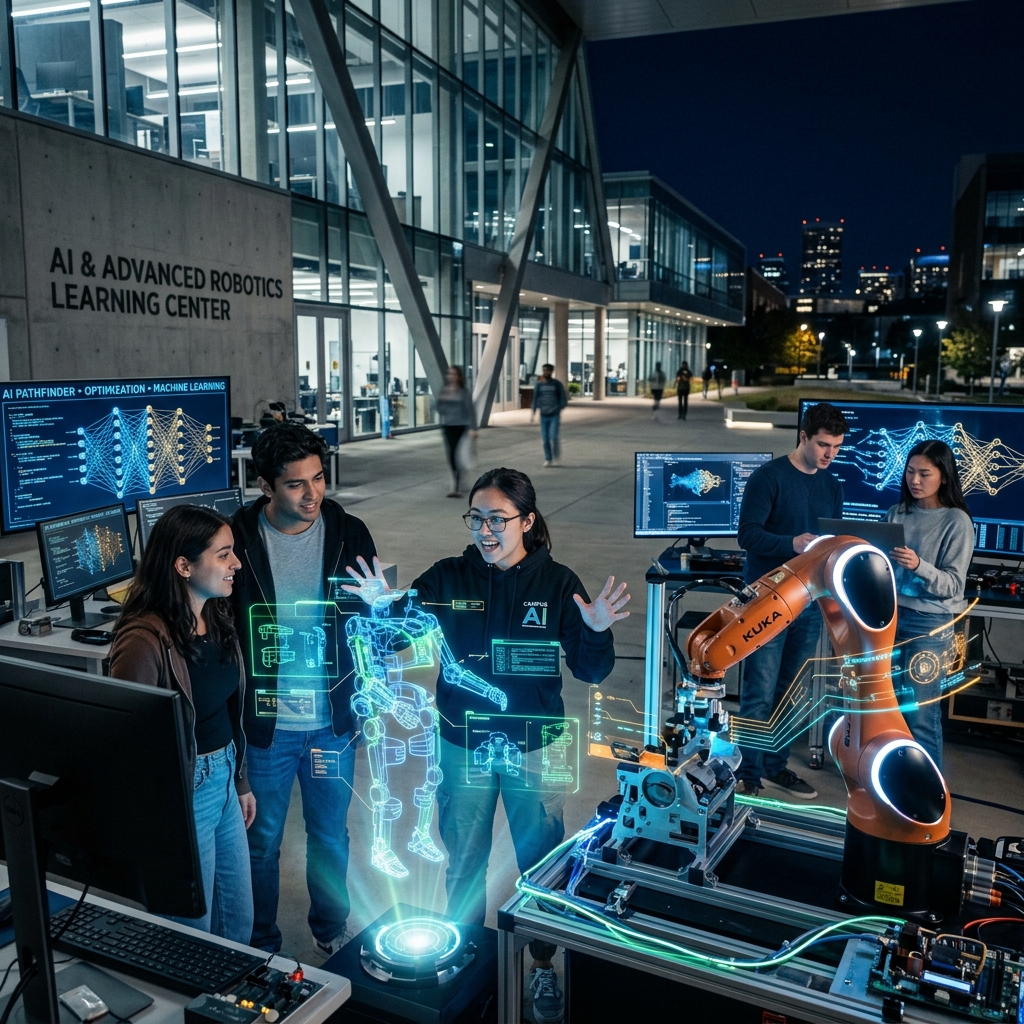
- Interdisciplinary Projects: We encourage students to form teams across different departments. For example, a computer science student might partner with a mechanical engineering student to build an AI-powered robotic arm.
- Industry Partnerships: We collaborate with leading tech companies to provide our students with real-world datasets and mentorship from industry experts. These partnerships often lead directly to exceptional placement opportunities for our graduates.
- Workshops and Seminars: Our Events and Clubs regularly host hackathons, guest lectures, and coding bootcamps focused on the latest advancements in AI and Deep Learning.
7. Preparing for Tomorrow's Careers
The job market is evolving rapidly. While some fear that AI will replace human jobs, the reality is that AI will replace tasks, not entire professions. The engineers of the future will need to work seamlessly alongside AI, using it as a tool to augment their own capabilities and creativity.
The most sought-after engineers will be those who can bridge the gap between their specific domain expertise (whether civil, mechanical, or electrical) and the power of artificial intelligence. By embracing these technologies today, JEC students are positioning themselves as leaders and innovators in the modern workforce.
Our dedicated placement cell works tirelessly to connect our AI-proficient students with top-tier companies. You can read inspiring success stories from our alumni on our Student Testimonials page, detailing how their education at JEC prepared them for the challenges of the tech industry.
8. The Role of Cloud Computing in AI
It is impossible to discuss the rise of AI without acknowledging the role of Cloud Computing. Training complex neural networks requires massive computational power and storage, which is often unfeasible for individual computers. Cloud platforms like Amazon Web Services (AWS), Google Cloud, and Microsoft Azure provide scalable infrastructure that allows engineers to train and deploy AI models on demand.
Understanding how to leverage cloud resources is a critical skill for modern engineers. At JEC, students learn not only how to build AI models locally but also how to deploy them to the cloud so they can be accessed by users worldwide. This practical, end-to-end approach ensures our graduates are "industry-ready" from day one.
9. The Future of AI: What Lies Ahead?
As we look to the future, the potential applications of AI in engineering are virtually limitless. We are standing on the precipice of breakthroughs in quantum computing, which will exponentially increase the processing power available for AI research. We will see the rise of more generalized AI systems capable of learning multiple tasks across different domains.
In materials science, AI is being used to discover new alloys and compounds with unprecedented strength and conductivity. In aerospace engineering, AI is optimizing flight paths to reduce fuel consumption and emissions. The engineers who will lead these advancements are the students sitting in classrooms today.
Conclusion
The integration of Artificial Intelligence into engineering education is not a passing trend; it is a fundamental shift in how we approach problem-solving and innovation. At Jaipur Engineering College, we are embracing this change wholeheartedly. We are providing our students with the knowledge, tools, and ethical framework they need to harness the power of AI and build a better future.
If you are passionate about technology and want to be at the forefront of the AI revolution, we invite you to explore the academic programs at JEC. Visit our Admissions Page to learn more about how you can start your journey with us.
Stay tuned to our Blog for more updates on our upcoming AI workshops, student projects, and industry insights!