REAP 2026 Seat Matrix: How to Choose the Right Engineering College in Rajasthan
For thousands of engineering aspirants across India, the release of the REAP 2026 Seat Matrix by the Centre of Electronic Governance (CEG), Rajasthan, marks the official start of the decision-making phase. Unlike states that rely purely on individual entrance test scores, the Rajasthan Engineering Admission Process operates an automated centralized allotment window that matches your merit rank against a strictly regulated grid of available seats.
Understanding the inner mechanics of this matrix isn’t just an academic exercise—it is the exact differentiator between getting stuck with an unwanted stream or securing a spot at a top engineering college in Rajasthan. Let’s break down how the matrix functions and how to use it to optimize your options.
The Three Major Operational Seat Pools
When evaluating the approved intake numbers for any private or government-aided engineering institute under the REAP 2026 Seat Matrix, the seats are legally divided into three distinct operational pools:
- Rajasthan State Domicile Seats (70%): The vast majority of the total intake is reserved strictly for candidates who meet the state domicile parameters (Categories A, B, and C). These seats are heavily influenced by the vertical and horizontal reservation policies of the Rajasthan state government.
- Outside Rajasthan / All India Seats (15%): This pool is explicitly designated for candidates applying from other states across India. These seats are allocated based entirely on national merit standards rather than regional state quotas.
- Institutional Management Seats (15%): The remaining portion of the approved intake is allocated directly at the institutional level. These admissions are processed by the individual colleges themselves, provided the candidates meet the baseline eligibility criteria established by the centralized committee.
Supernumerary Matrix Enhancements
Beyond the standard 100% intake capacity, the matrix features additional, specialized seats that provide major benefits if you qualify:
- Tuition Fee Waiver Scheme (TFWS): An additional 5% of seats added to the top of the approved intake for financially eligible students, waiving the base tuition cost entirely.
- Kashmiri Migrants (KM): A 5% supernumerary buffer explicitly designated for eligible migrant profiles.
The Priority Logic for Seat Allotment
The computerized REAP allocation system processes student choices based on a strict, three-tiered priority logic. Your position in the seat allotment sequence depends entirely on which academic pipeline you use to apply:
- Priority 1 (Highest Priority): The system first evaluates candidates based on their All India Rank (AIR) obtained in the JEE Main exam. These applicants get the first pick of branches and colleges.
- Priority 2 (Second Priority): Once the JEE Main applicants are processed, the system evaluates non-JEE candidates based on their Scaled Percentile or aggregate marks obtained in their Class 12th (10+2) Science board exams.
- Priority 3 (Third Priority): The final allocation sequence evaluates candidates based on the percentage they obtained in an approved Engineering Diploma, which is typically used for specific vacant seats or lateral entry pathways.
Strategic Note: Even with a borderline score in JEE Main, applying under Priority 1 automatically positions your application profile inside the selection sequence ahead of applicants with exceptionally high 12th board marks who are applying under Priority 2.
State Reservation Dynamics to Watch
The REAP 2026 Seat Matrix applies an intricate layout of vertical and horizontal reservations across the 70% state quota seats. When building your list, your category rank determines your actual probability of success:
- Vertical Classifications: Scheduled Castes (16%), Scheduled Tribes (12%), OBC Non-Creamy Layer (21%), EWS (10%), and MBC-NCL (5%).
- Horizontal Filters: Applied across all classes, including a 25% horizontal layout for women candidates and 5% for Persons with Disabilities (PwD).
Step-by-Step Strategy: Building Your Choice Filling List
To turn the raw data of the seat matrix into a successful allotment, approach your online form with a calculated strategy:
Step 1: Check Institutional Credibility and Real Codes
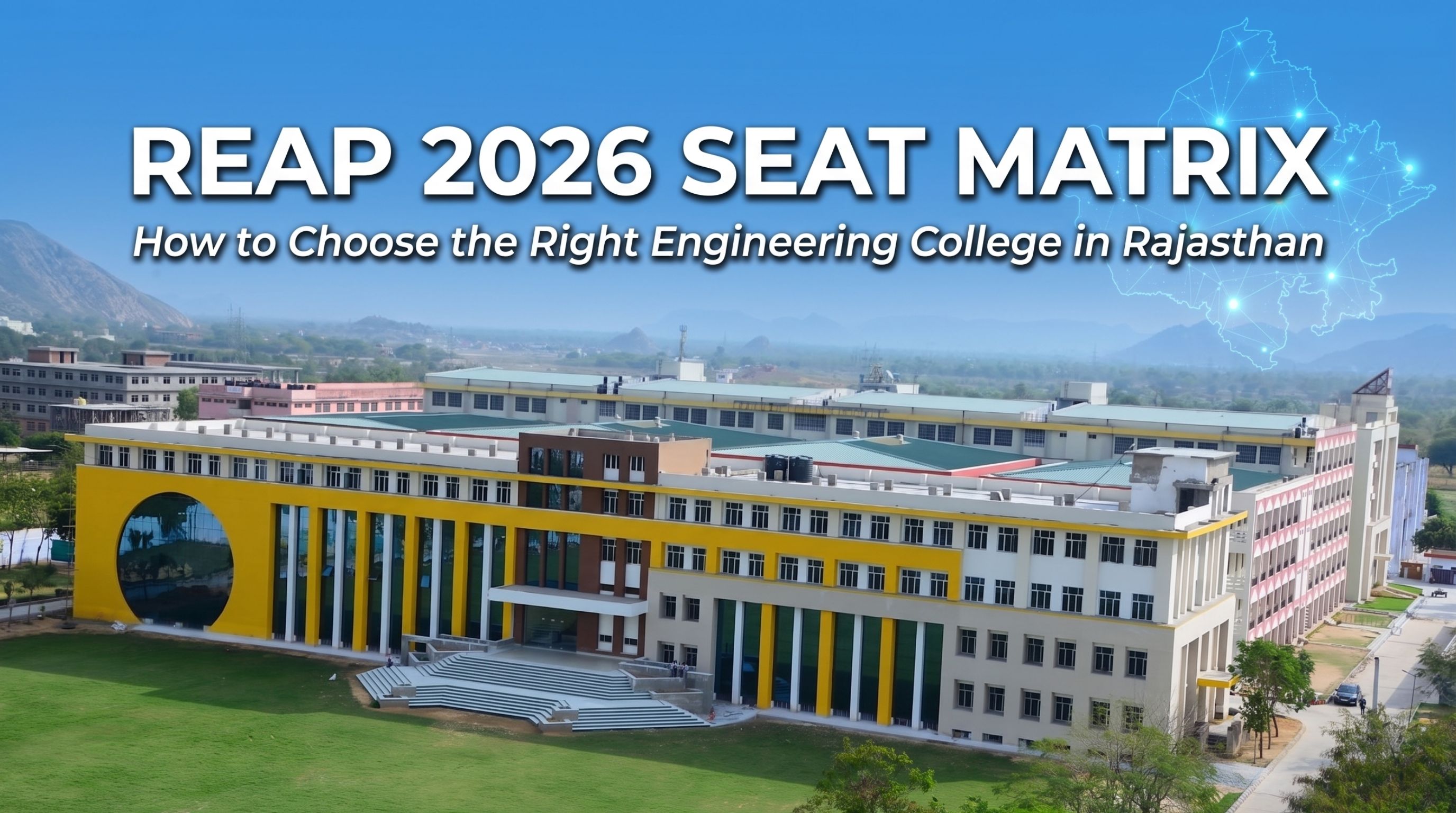
Every college listed in the system is assigned an official, unique four-digit identification code. When reviewing options, verify that the infrastructure matches your expectations. For instance, elite private options like Jaipur Engineering College (JEC) Kukas stand out because they build high-tech computing ecosystems and advanced industrial labs directly on top of the base university curriculum.
Step 2: Order Your Preferences Top-Down
The allocation algorithm works down your list line by line. Never place a lower-preferred college above your dream option out of fear of cutoffs. If a best engineering college in Jaipur is your primary target, position its specific code and branch at serial number 1. If that seat is full, the computer instantly scans your second choice without penalizing your rank.
Step 3: Leverage the Upward Movement Feature
If the initial round awards you a seat lower on your list, do not cancel your progress. Report to the allotted college, pay the base fees to lock your eligibility, and select the "Upward Movement" option on your dashboard. If vacancies occur in higher-ranked options in subsequent rounds, the system will automatically transition your seat upward.
Conclusion: Data Beats Guesswork
The REAP 2026 Seat Matrix is not just a list of numbers; it is your core map for accessing higher technical education in Rajasthan. By matching your priority path against the available seat splits, locking your options carefully, and making calculated branch choices, you can completely take control of your engineering admissions journey.